


€51.36
(tax excl.)
€62.66
(tax incl.)
ErreBi code: 56736Producer: ErreBi
No products
 1 voti
1 voti
1 voti
1 voti
1 voti
Manual tools for working in the wiring field are varied; among these, the most used are pliers, screwdrivers, and crimping tools. Specifically, manual crimping tools—although performing different functions—are all those tools that allow you to manually carry out operations that consist of connecting an electrical cable to another specific component. The connection obtained is both physical and electrical, therefore involving the passage of current through all the elements involved in crimping. These tools are widely used and requested not only by professionals but also by those who, although not specialists, need to periodically perform simple DIY operations. For this reason, it is often possible to purchase pliers, screwdrivers, and crimping tools online at advantageous prices. In fact, online sales of screwdrivers, pliers, and other more or less professional tools is a service offered by companies in the sector to make the purchase of safe and quality products even simpler, faster, and more accessible.
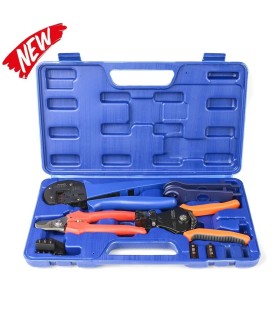
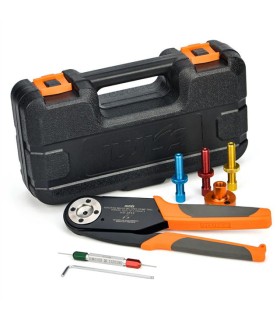
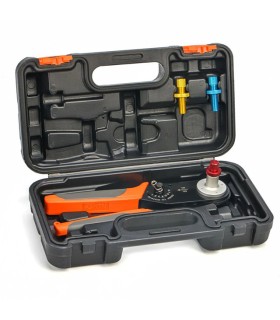
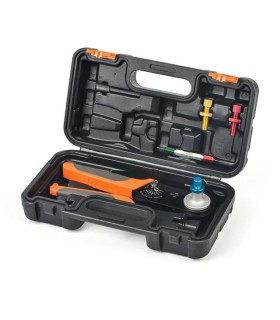
Manual tools for wiring include a tool for every need: working with electrical cables and current is an operation to be carried out in complete safety using the right tools. For this reason, kits and easily portable sets containing various types of tools are very common, gathering all the main tools needed for the most common jobs in one container. In other cases, it is possible to purchase the carrying case separately and then compose your own set with the desired tools according to your needs. Regarding electrical connection operations, there are many specific kits, also available online, dedicated to different types of crimping (for cars, photovoltaic systems, etc.); this is because electrical cables are not the same across all sectors and it is necessary to have the right tools to work optimally, case by case.
Among the many manual tools on the market, the most purchased and requested are certainly screwdrivers and pliers. These items are very useful both for professional jobs and small DIY operations and can be found in their classic version or in models with specific features that allow precise and safe work even on electrical materials.
Screwdrivers: screwdrivers (or turndrivers) are tools that are never missing either at home or in any other public or work context. There are different types of screwdrivers distinguished by function, size, and tip shape. For calibrating trimmers, special “non-inductive” screwdrivers with shafts made of ceramic, plastic, or other specific materials are used.
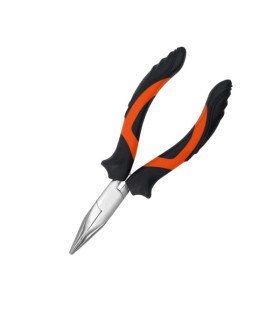
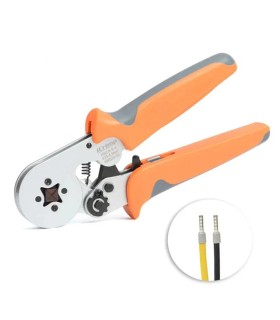
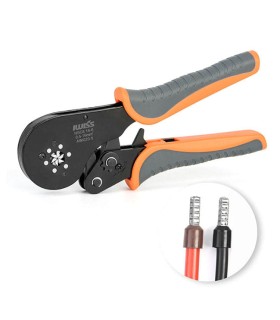
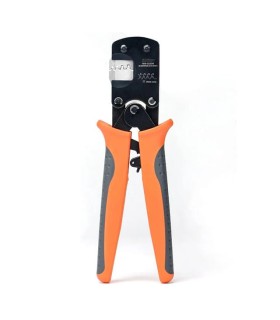
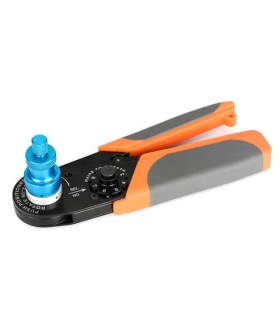
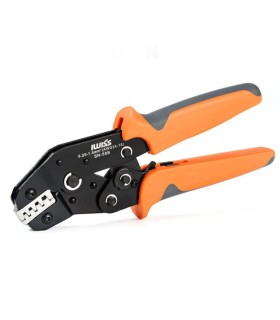
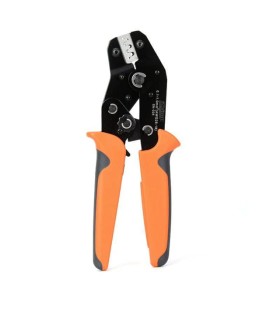
Pliers: pliers are another tool widely used in different fields. There are also different types, and some are specifically designed to perform crimping tasks. Crimping pliers are used to strip electrical cables, thus connecting the wires inside the conductor.
Pliers are the most versatile tool among all manual tools: there are indeed different types, each intended for certain jobs and functions; regardless of the model, the handle is almost always made of insulating material to avoid unpleasant accidents when working with materials or electrical cables. Let’s look at the most used types of pliers.
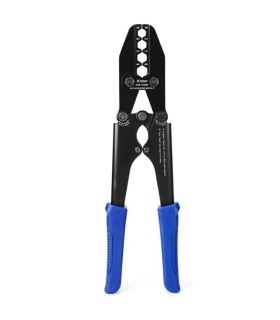
There are various crimping tools on the market used to connect cables, terminals, and other elements by exerting strong pressure that seals the union between the parts. For convenience, crimping tools can be divided into two large categories: electronic and manual. The main differences are that electronic tools are used professionally, can be large, and naturally operate using electric power, while manual tools are small, easily portable, and usable for DIY jobs. Crimping tools, whether mechanical or manual, usually perform multiple functions: besides crimping, they can also bend, strip cables, and cut. This multifunctionality allows for a complete, clean, and precise job without resorting to additional tools, saving time, money, and space. Naturally, to ensure the use of safe and quality crimping tools, it is advisable to purchase from reliable dealers and check that they have technical data sheets and CE certification.
An indispensable tool both at home and in work, industrial, and professional contexts, the screwdriver is essential for both complex operations and basic DIY tasks. However, there are different screwdriver models, and using the right one allows you to work quickly and correctly. But how to choose the screwdriver best suited to your needs? Regarding the model, it is good to know what jobs the screwdriver will be used for, and based on this, choose among:
Besides the model, it is also important to choose the screwdriver based on the correct tip type (cross, star, etc.) depending on the screws to be tightened or loosened, although ideally, it is best to buy several different screwdrivers, especially regarding tip types, to be ready for any eventuality. In any case, it is always fundamental to use certified items to work in complete peace and safety.
From Monday to Friday 9-13 / 14-18
Phone: +39 055.863311
E-mail: [email protected]
Live Chat: from 8:00 to 17:00 Monday through Friday
Skype: ErreBi cablaggi s.r.l.
WhatsApp: +39 3293520566
Telegram: @ErreBi_cablaggi

Please sign in first.
Sign in
Create a free account to use wishlists.
Sign in





 English
 Italiano
 Deutsch
 Français
 Spanish