Industrial machines for cutting and stripping single-core and multi-core cables
Industrial machines for cutting and stripping single-core and multi-core electrical cables are used to remove the insulating sheath covering the connector wires. Cutting and stripping cables, whether single-core or multi-core, serves to extract the copper conductor, which can then be connected to a plug, a button, or another electrical cable. These operations are essential whenever working with electrical cables and when there is a need to cut, replace damaged copper parts, or add elements such as plugs and switches to ensure the correct flow of current. Cutting and stripping determine the success or failure of an electrical connection, ensuring its effectiveness and safety: indispensable elements especially in industrial environments where strict work standards must be respected. There are various models of machines available on the market that perform these precision tasks, chosen according to the work to be done. Their size varies depending on the type, although the mode of use is similar and consists of placing the cable on a roller, activating the machine, and letting the cable slide on a roller where it is properly processed.
Main types of cutting, stripping, crimping, and cable stripping machines for sale
Types of machines for cutting and stripping cables mainly differ by the size of the cables to be inserted into the appropriate compartments and by the different functions (for example: cutting, stripping, crimping, etc.) they can perform; however, all allow for precise work in very little time. Here are some of the main models available:
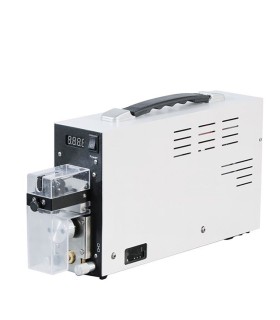
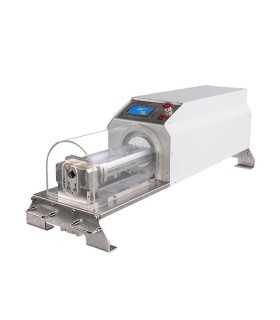
- Cable stripping machines: can be electric or manual and strip the cable by making a cut along the insulating sheath that allows easy extraction of the copper wires inside.
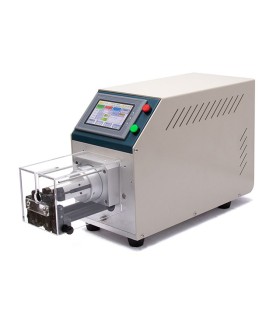
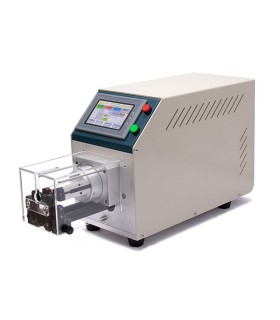
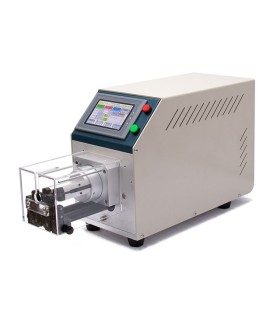
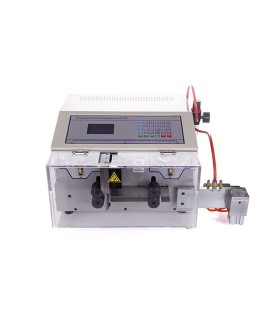
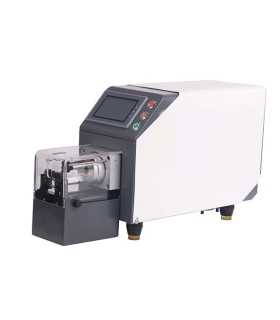
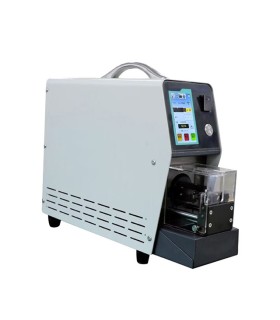
- Cutting and stripping machines: mainly electric machines that, as the name suggests, combine the cutting and stripping actions. These devices are equipped with software to set the stripping length after cutting in the desired section. Various types exist depending on the conductor size, cutting length, maximum and minimum stripping length, and the maximum and minimum guide tube diameter.
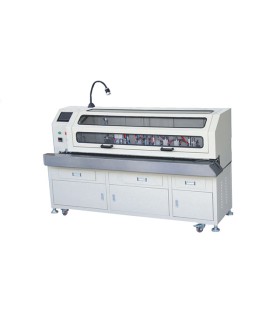
- Cut, strip, and crimp machines: these machines are generally large and equipped with applicators and more complex internal software because besides cutting and stripping, they also perform crimping, which consists of attaching a terminal at the cable end. They can be automatic or semi-automatic.
Cut and strip cables in a single machine with or without strand twisting
The cutting and stripping of electrical cables can be performed by two separate machines, each with its function, or by a single machine combining both operations. This machine can also be equipped with a device for twisting the strand.
Twisting, also called stranding, is the process in which the wires inside the cable (the strand) are twisted; this operation is especially useful for audio or video cables because it eliminates or greatly reduces possible electromagnetic interference that could compromise signal transmission. These electronic machines work quickly and very precisely, and it is possible to decide the cutting length and the stripping length. When choosing a machine, it is essential to check all technical specifications and ensure it has the CE mark, certifying the manufacturer’s control and compliance with EU requirements for safety, health, and environmental protection.
Advantages of automatic cable strippers and cut-strip-crimp machines
The advantages of automatic cable strippers and cut-strip-crimp machines are many, which is why professionals in the wiring field cannot do without them. One of the most important positive features is precision: thanks to the automation of blades and guides, the stripping and cutting of cables occur cleanly and precisely, involving only the relevant section. Another advantage is speed, as these devices allow tasks to be performed in a very short time compared to manual operation. This advantage is particularly significant for cut-strip-crimp machines, which can concentrate three different operations in a short time and produce many products in a few minutes. Another important aspect is versatility, i.e., the ability to use the same machine for cables of different sizes by setting all the required characteristics for each operation, such as cut length. Finally, the precision and professionalism of these machines are combined with great intuitiveness, allowing proper and complete use by workers even if they are not technology experts.
Cable stripping, wire stripping, and cut-strip-crimp: functionality and safety
Electronic cable strippers and cut-strip-crimp machines combine functionality and safety: they are practical and fast to use and offer a good alternative to manual operations, which can be riskier for operators. In summary, when working with electrical cables, manual skill and experience are important, but using safe tools and machines is fundamental: only then can one be sure to do the job correctly, avoid unpleasant accidents, and at the same time obtain stable and high-performance wiring according to their intended use. For this reason, electronic cable strippers, wire strippers, and cut-strip-crimp machines should be used with appropriate precautions, such as wearing protective gloves and paying close attention to blade positioning. A good machine will always come with an instruction manual explaining in detail how to avoid injuries and accidents and will always feature the CE mark, certifying compliance with safety and suitability standards.
Maintenance of cable stripping and cut-strip-crimp machines
Proper maintenance allows for correct use and long-lasting durability of both cable stripping and cut-strip-crimp machines. In most cases, the instruction manual will list good practices to follow, but some of the simplest precautions are the following:
- After operations, clean the work area and machine from all waste products to prevent residue buildup inside guides and gears;
- Keep the machine well lubricated by applying the correct amount of oil at regular intervals to avoid noise and friction;
- Ensure compliance with the machine's usage intervals (if applicable) to prevent overheating.
These are just some maintenance instructions: each machine will have specific features that require different care. For this reason, it is always advisable to carefully read the instructions and, if damaged, missing, or worn parts are noticed, to replace them, contacting the supplier if there are doubts about which components to change. This way, you will extend the life of your machines and be sure to use them in the best possible way.








 English
 Italiano
 Deutsch
 Français
 Spanish