


€41.15
(tax excl.)
€50.20
(tax incl.)
ErreBi code: 56710Producer: ErreBi
 1 voti
At Errebishop, for over twenty years we have been involved in the manufacturing and wholesale sale of crimping dies, cables, connectors, and all wiring accessories. Our products represent a true guarantee in the sector, and are made fully respecting regulations and safety standards. They are also manufactured with top-quality materials, carefully selected by our suppliers, who today are well-established and reliable companies in the national and international markets. We also have two production plants through which we can satisfy all customers’ requests, even the most specific ones, quickly, guaranteeing competitive and affordable prices. One of our strengths has always been our highly qualified staff, who carefully follow every phase of product manufacturing, also taking care of all subsequent steps related to sales. In recent years, we have decided to simplify purchasing for our customers and allow everyone to buy our products by directing the wholesale sale of crimping dies and wiring accessories online: in fact, we have created a website where it is possible to purchase all wiring materials through a few simple steps and access detailed and complete technical data sheets for every item. Finally, we have sought to make the purchasing process increasingly easy by equipping our e-commerce platform with a live customer service chat: a simple tool through which it is possible to request information about products or online procedures, to be sure of completing purchases correctly.
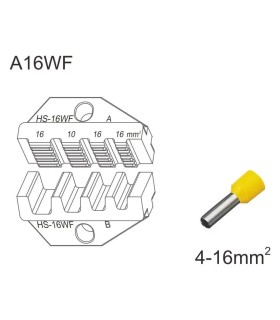
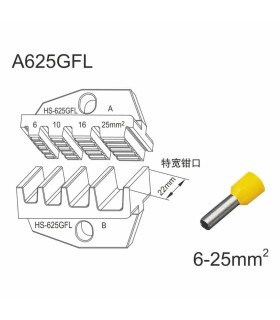
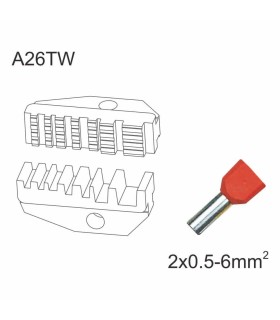
To understand what crimping dies are and what they are used for, it is necessary to consider the meaning of crimping and how it is performed. Crimping is a common operation in wiring that involves connecting a cable to its termination or connector. The union is both physical, as the cable is joined to the destination element, and electrical since once the connection is correctly established, the passage of electric current (or data) can occur. To perform the crimping operation, a specific tool is needed, namely a crimping plier, which requires dies placed at the ends to work: it is precisely the dies that come into contact with the cable and the element to be connected, allowing the crimping to happen. On the plier, the dies must always be positioned in pairs, respecting the correct placement and carefully inserting the locking pin to secure their position.
The crimping dies are accessories that must be added to a dedicated plier and vary depending on the type of crimping to be performed: there are indeed different types, and choosing the right one depends exclusively on your needs and the material to be crimped.
But how do crimping dies work? All dies, once applied to the plier, allow the crimping operation through a mechanical squeezing that holds the cable on the connector due to the pressure applied. If the plier and dies are used correctly, the mechanical squeezing ensures a good electrical connection. Often, however, crimping alone is not sufficient, especially in conditions where external agents (such as water or humidity) could compromise the connection: in these cases, soldering with a tin alloy is also preferred.
Once crimping is done, the connection is irreversible and it is no longer possible to detach the cable from the previously connected connector. Also, crimping pliers (or presses) are not all the same but have differences: for example, the crimp profile (oval, hexagonal, trapezoidal, etc.) can vary, and some models are designed to crimp specific materials or work under certain voltage ranges (e.g., pliers ideal for connecting non-insulated joints or working within specific electrical voltage intervals). As already mentioned, we always recommend consulting an expert before purchasing to be sure of making the right choice.
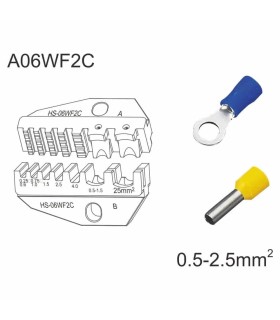
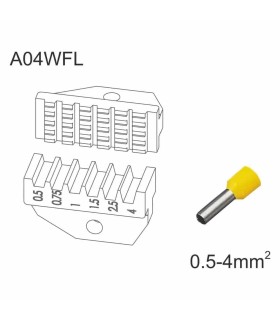
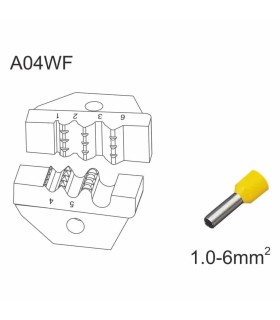
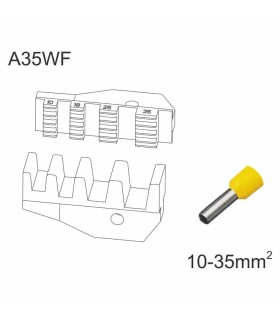
Let’s analyze in detail some types of crimping dies:
These are some common examples of dies, but many different types exist on the market, each specific to the connector to be crimped. In any case, it is important that these accessories are made according to precise safety standards to avoid unpleasant surprises or dangerous issues.
From Monday to Friday 9-13 / 14-18
Phone: +39 055.863311
E-mail: [email protected]
Live Chat: from 8:00 to 17:00 Monday through Friday
Skype: ErreBi cablaggi s.r.l.
WhatsApp: +39 3293520566
Telegram: @ErreBi_cablaggi

Please sign in first.
Sign in
Create a free account to use wishlists.
Sign in



 English
 Italiano
 Deutsch
 Français
 Spanish